A wall-mounted arcade machine concept designed as a modern entertainment object for contemporary interiors.
Overview
Arcade hardware designed for contemporary interiors.
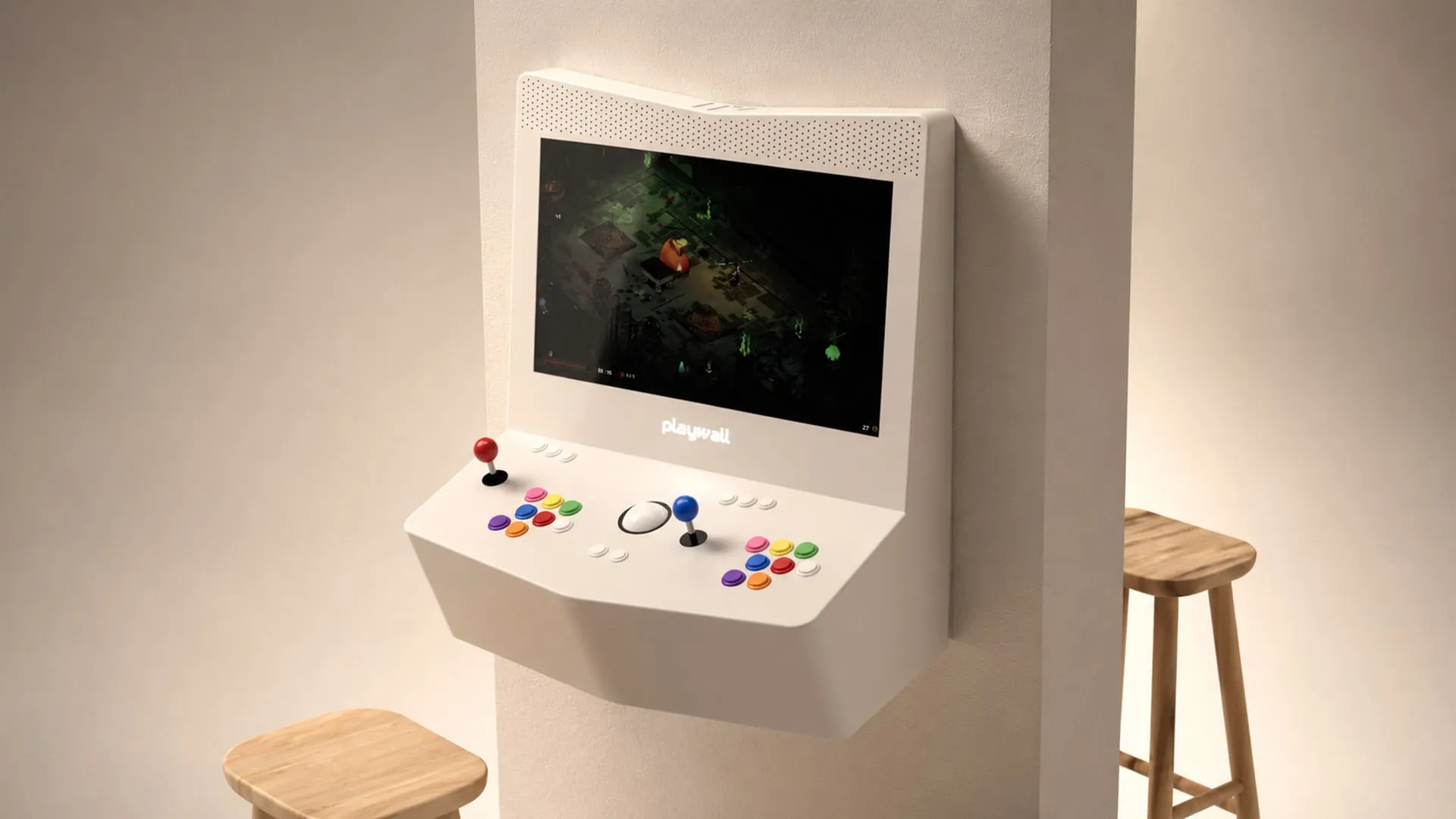
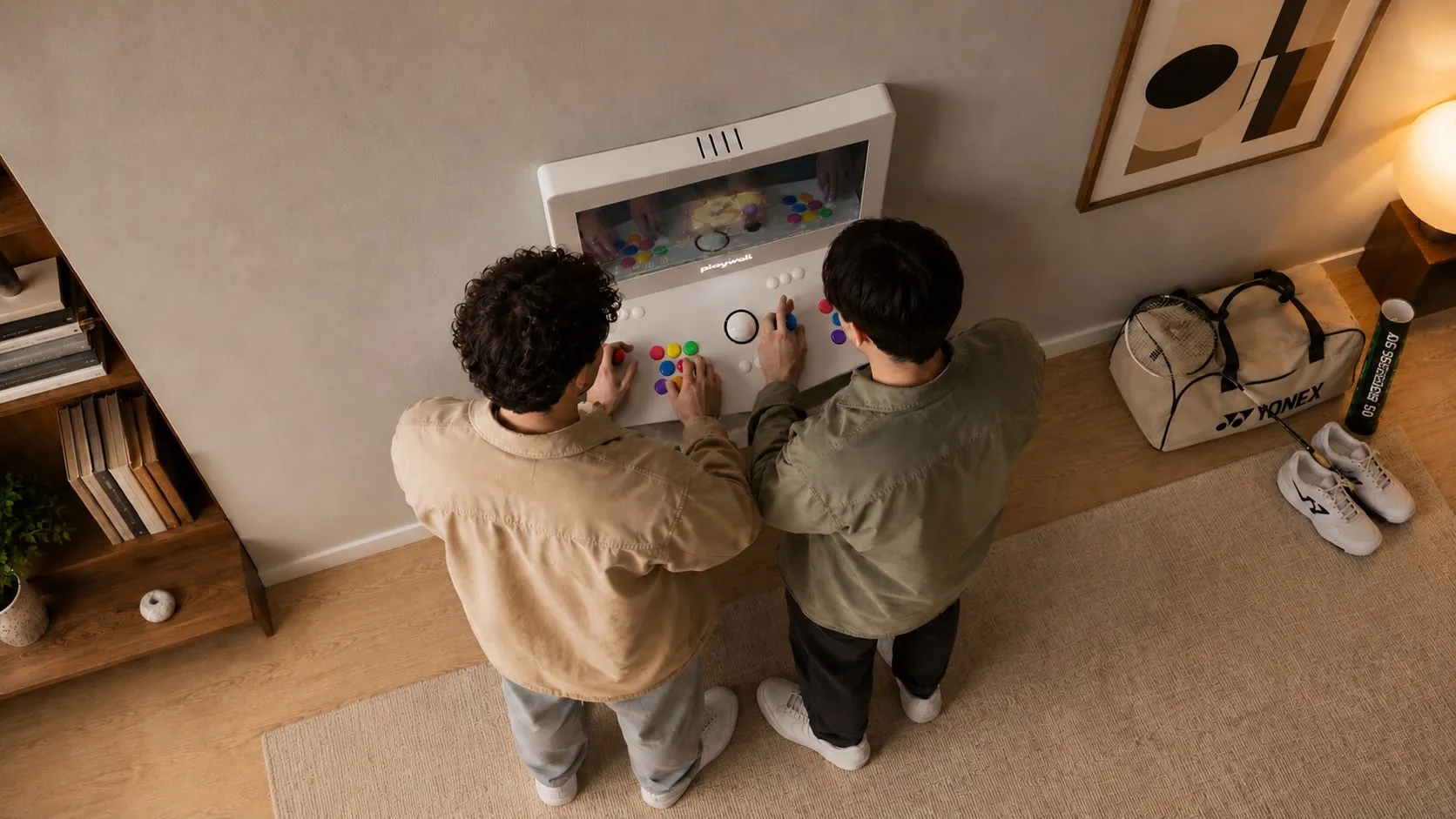
Playwall reimagines the arcade cabinet as a compact wall-mounted entertainment product. Instead of dominating a room, it becomes part of the interior, combining familiar arcade interaction with a cleaner architectural form.
Challenge
Making arcade hardware feel less like a machine and more like part of the room.
Traditional arcade cabinets are large, visually heavy, and often tied to retro gaming spaces. The challenge was to keep the familiar arcade experience while creating a product that could live comfortably inside a modern home.
Design Goals
A compact arcade system with a lighter physical presence.
- Reduce floor footprint through a wall-mounted structure.
- Keep the arcade interaction familiar and immediate.
- Simplify the cabinet into a cleaner architectural form.
- Balance playful controls with a more refined product body.
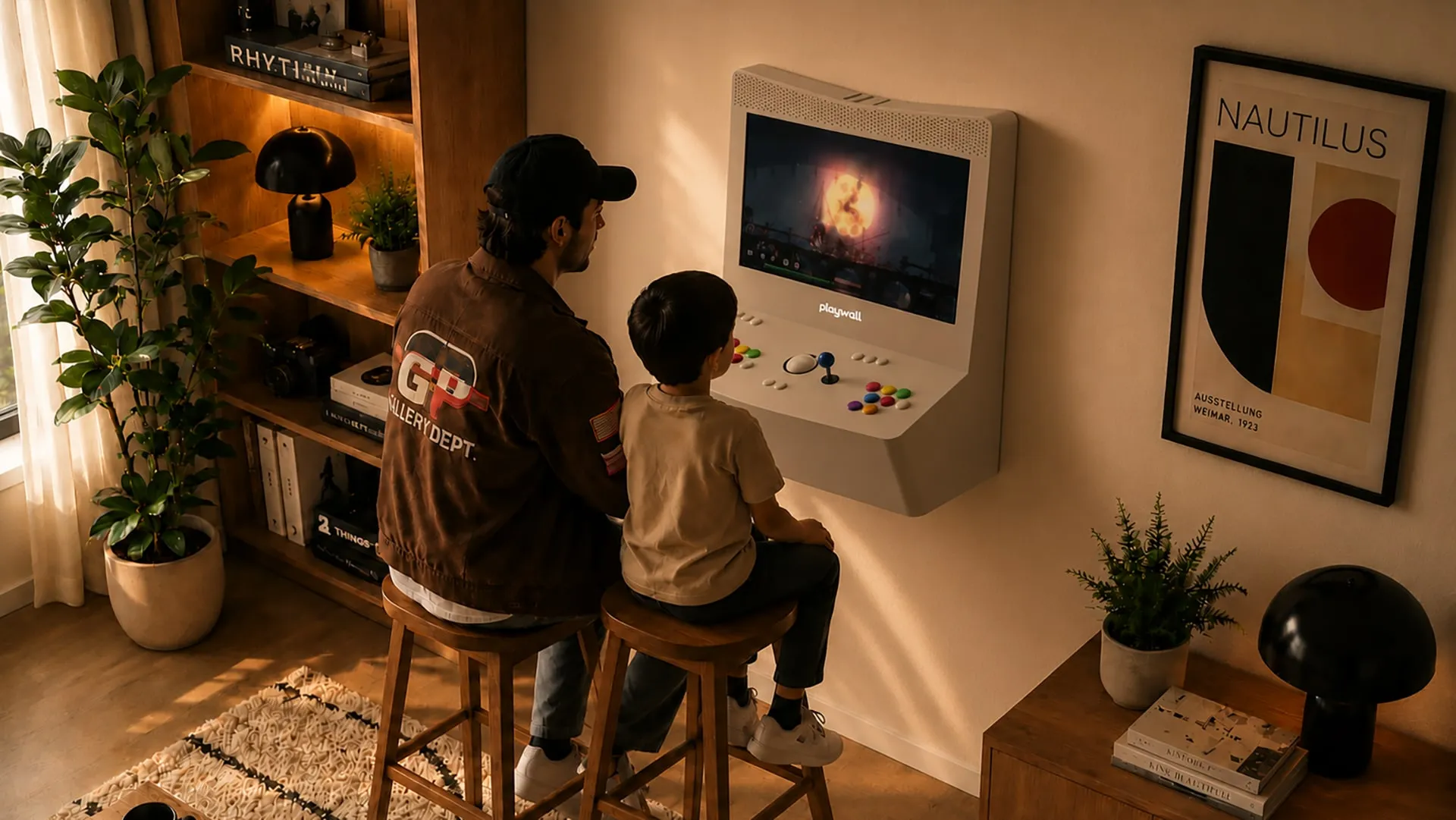
- Create a design that can work in personal and shared interiors.
Product Direction
A familiar arcade experience inside a more architectural object.
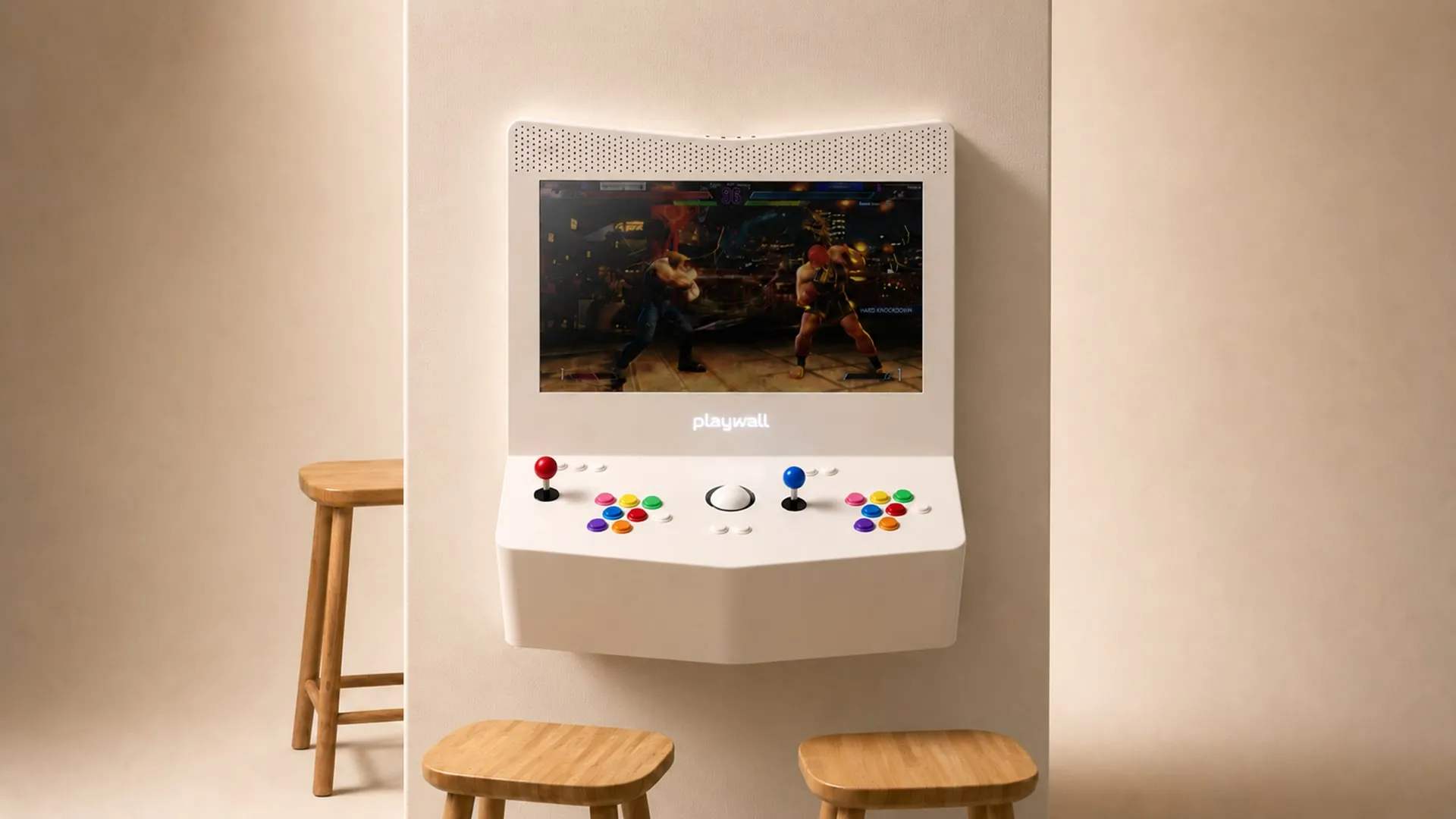
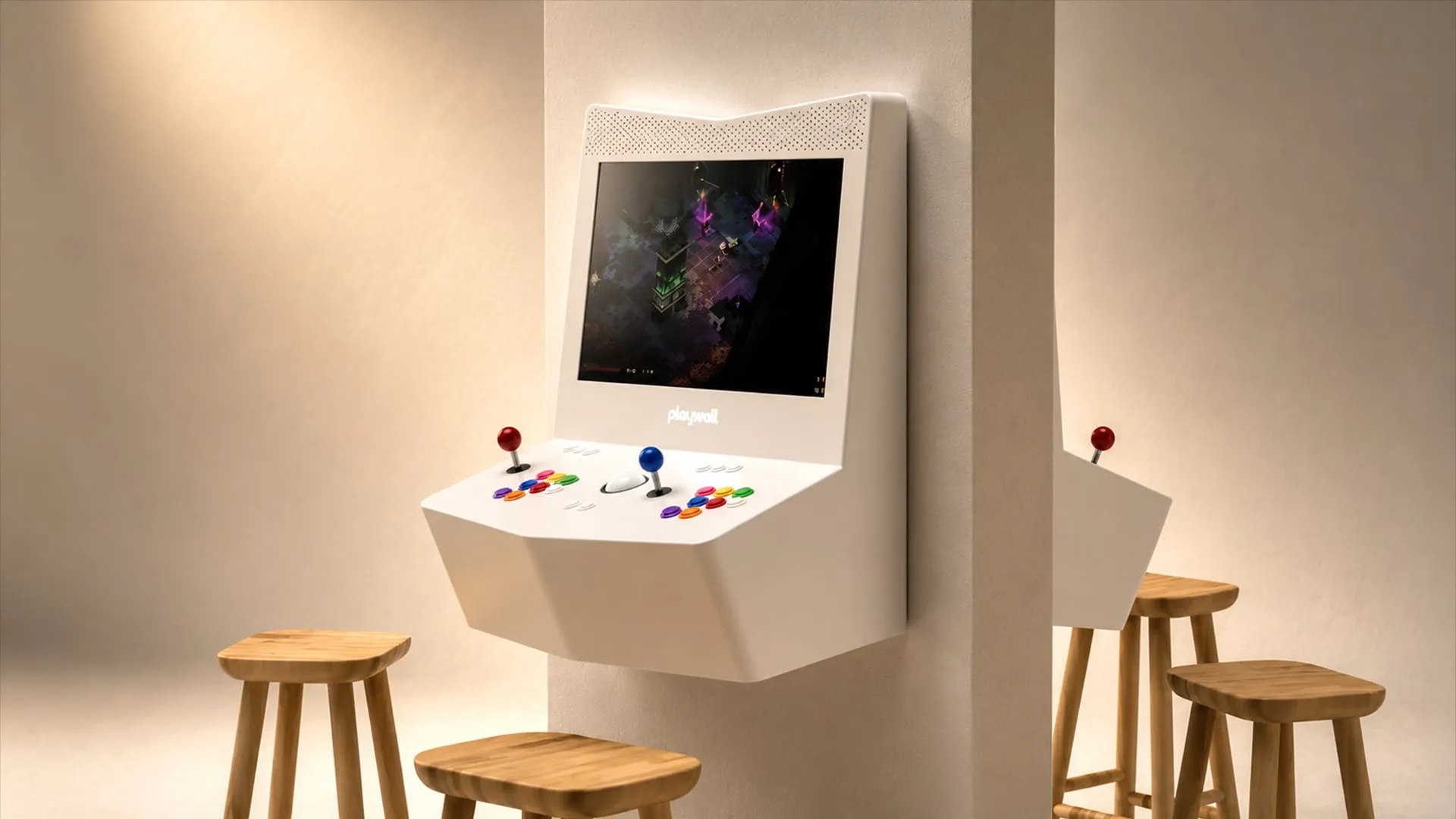
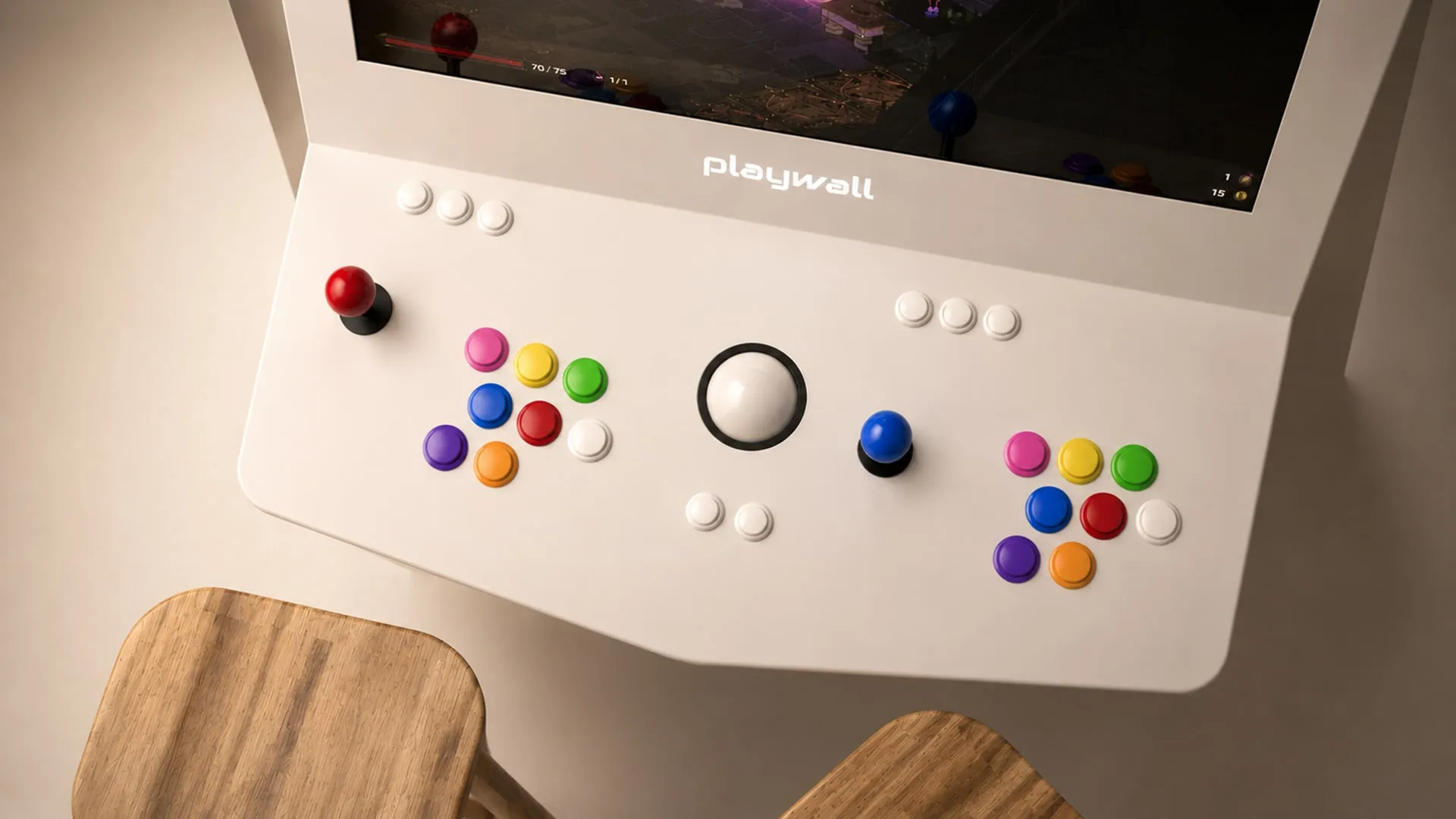
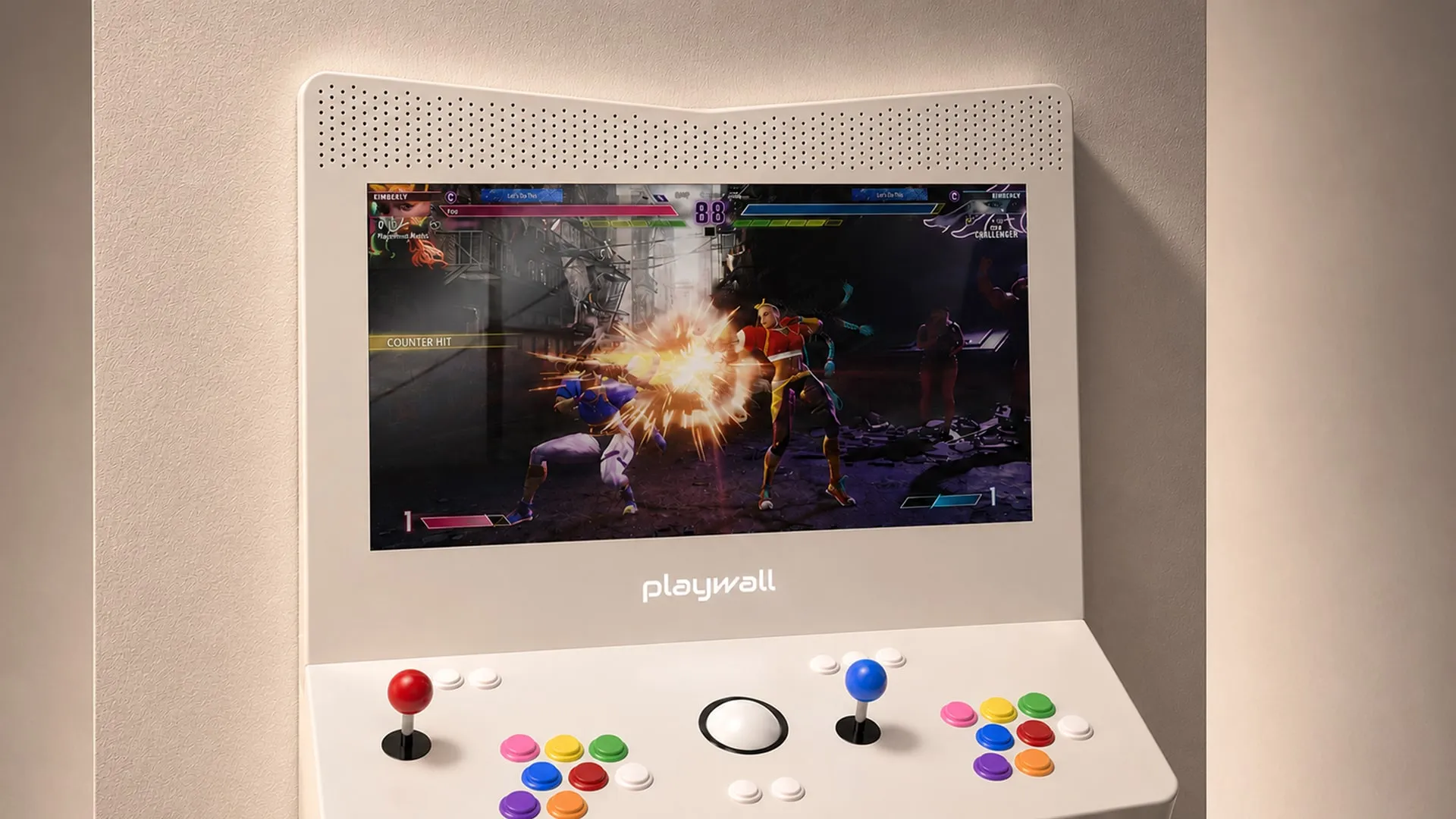
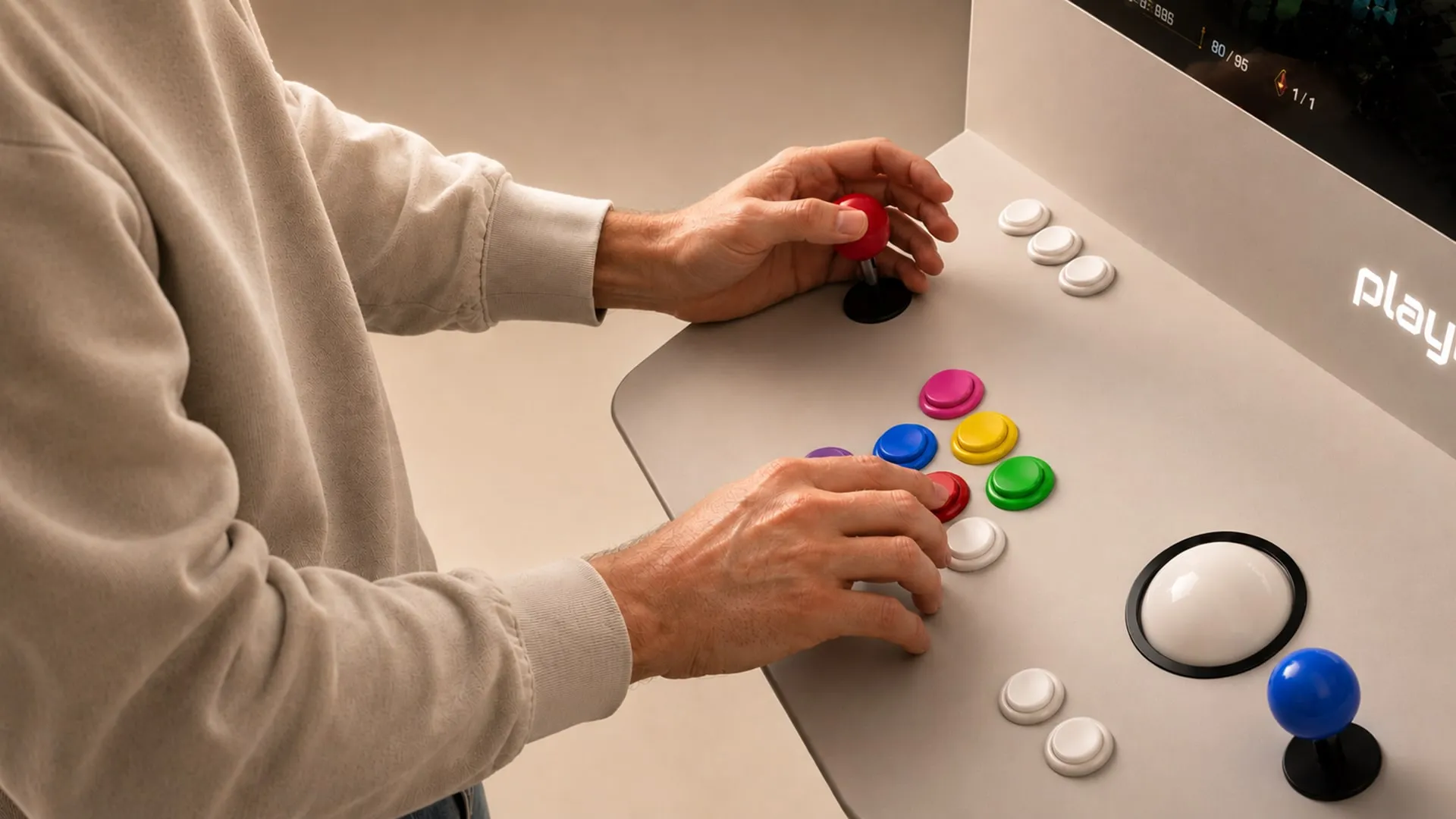
The design keeps the screen, joysticks, buttons, and trackball immediately visible, but places them inside a simplified wall-mounted body. The result is still clearly an arcade machine, but its overall presence becomes closer to furniture, consumer electronics, and interior product design.
Wall-Mounted Form
The wall-mounted body reduces visual and physical weight.
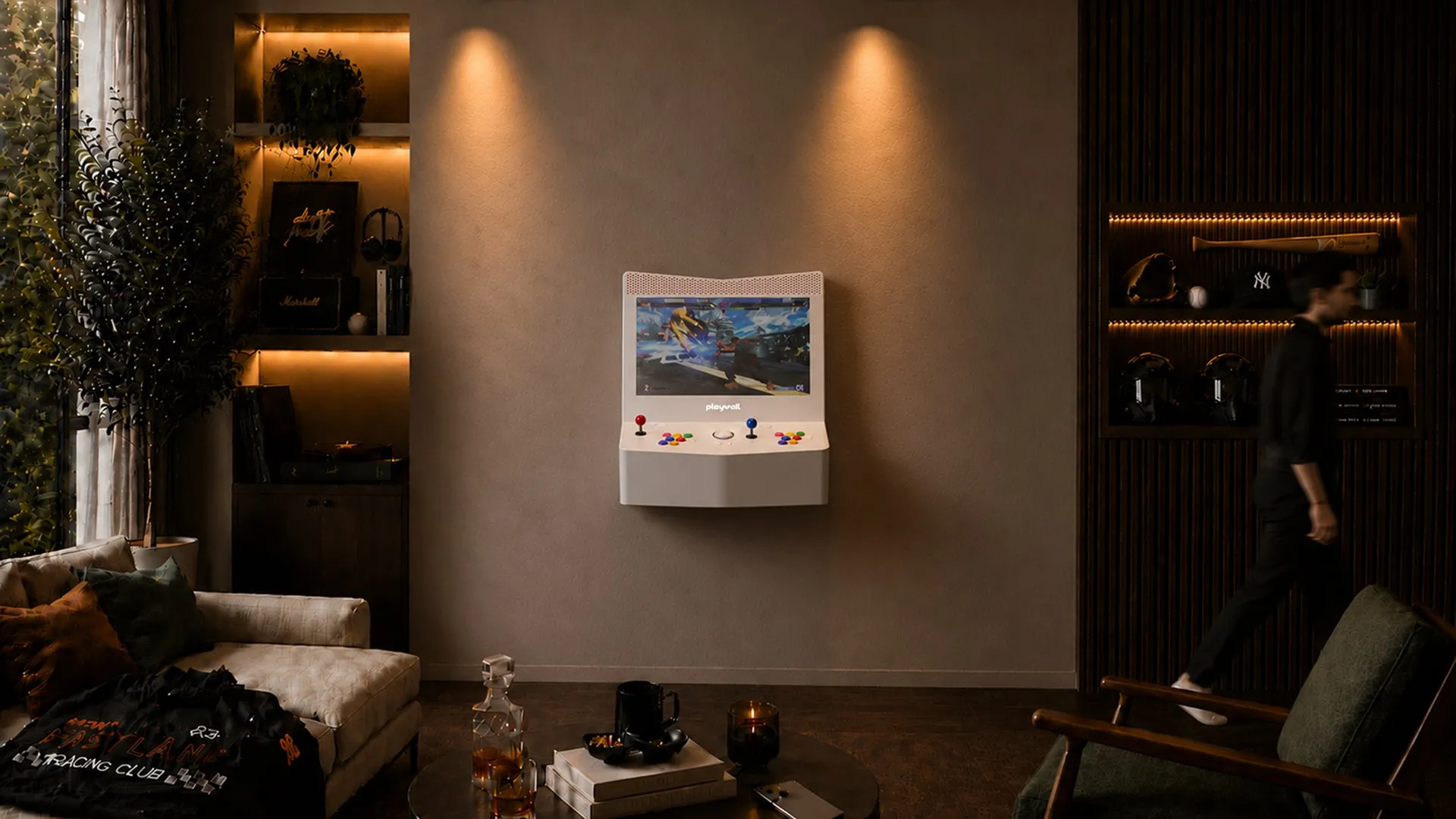
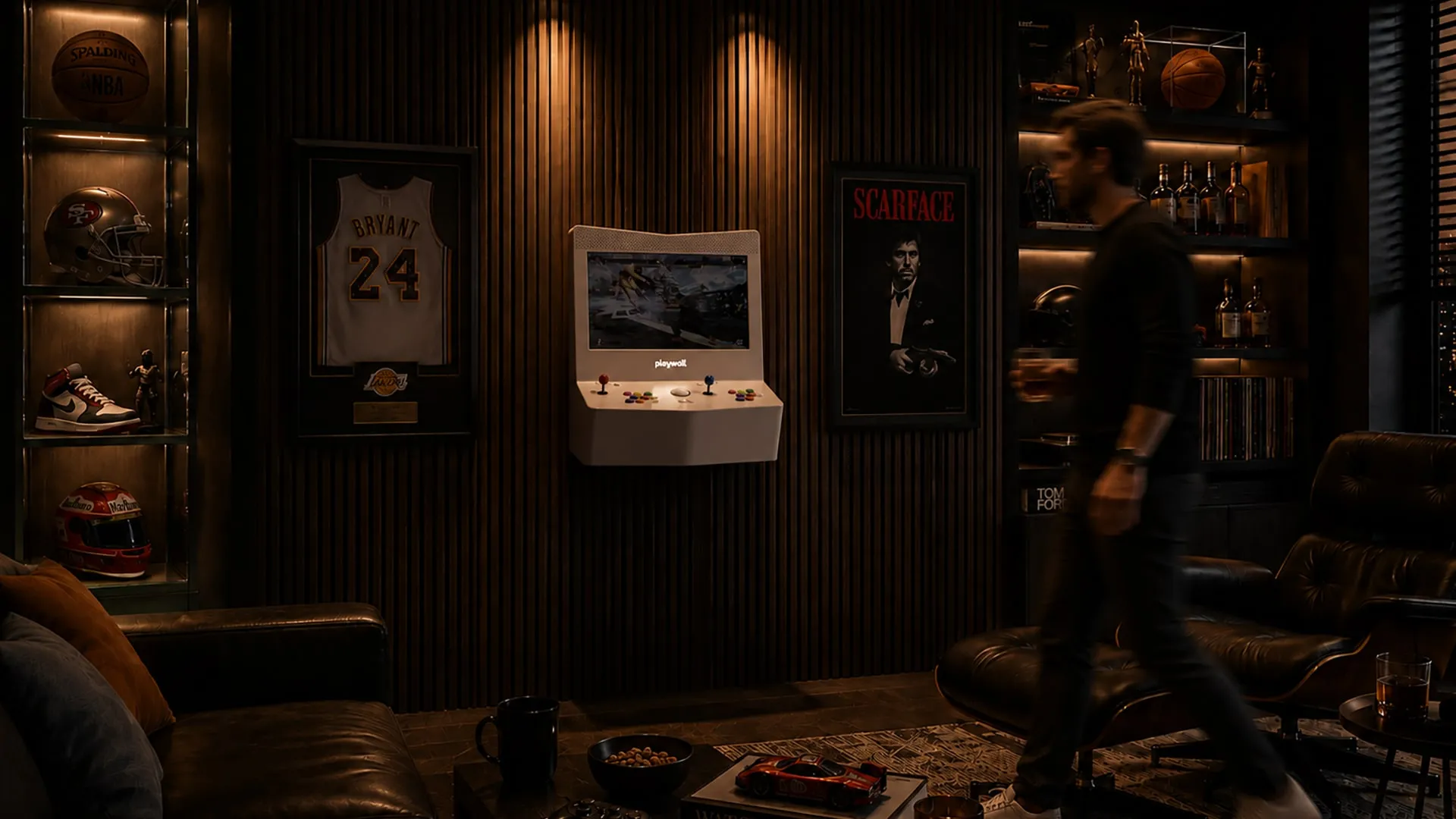
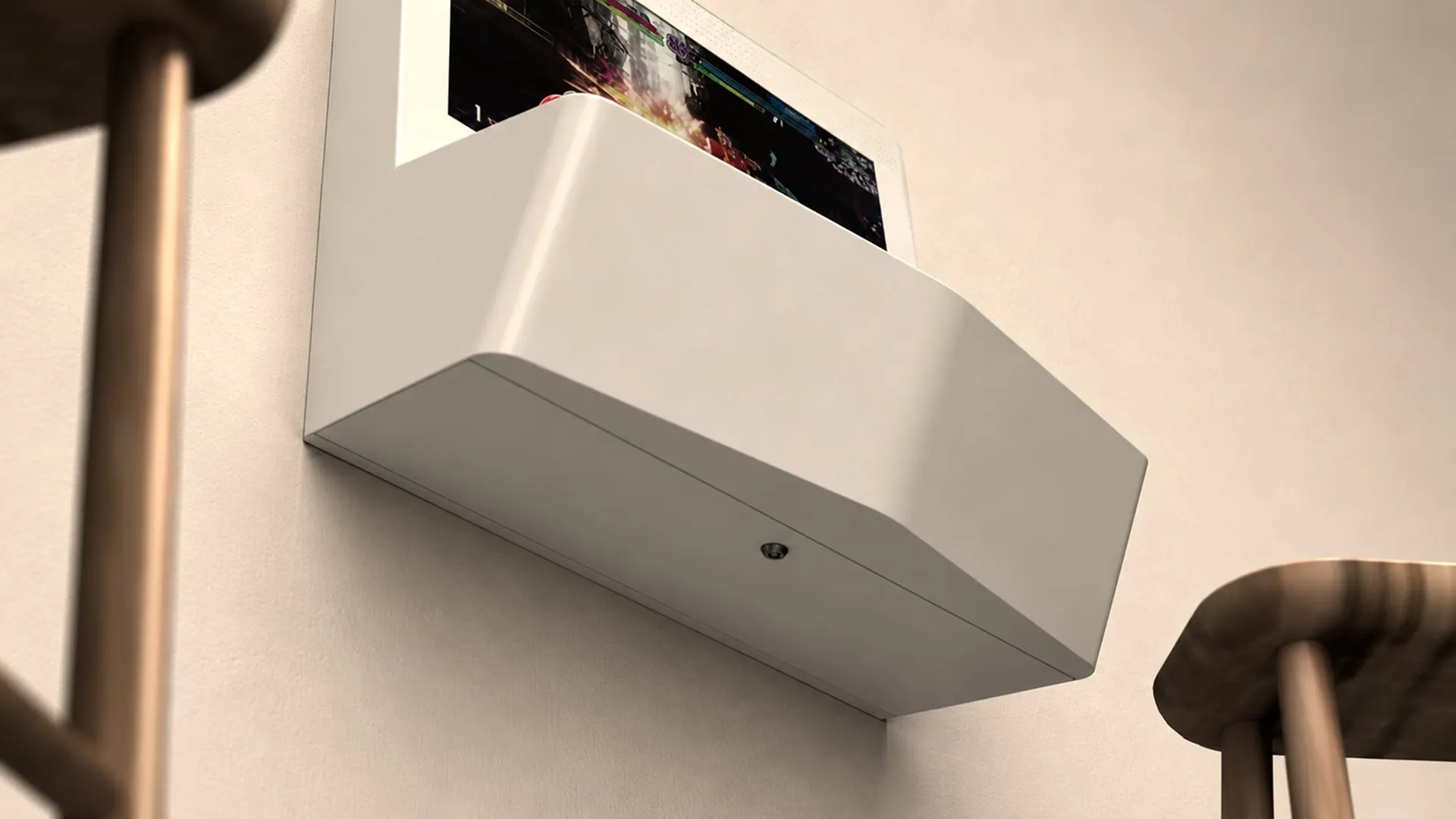
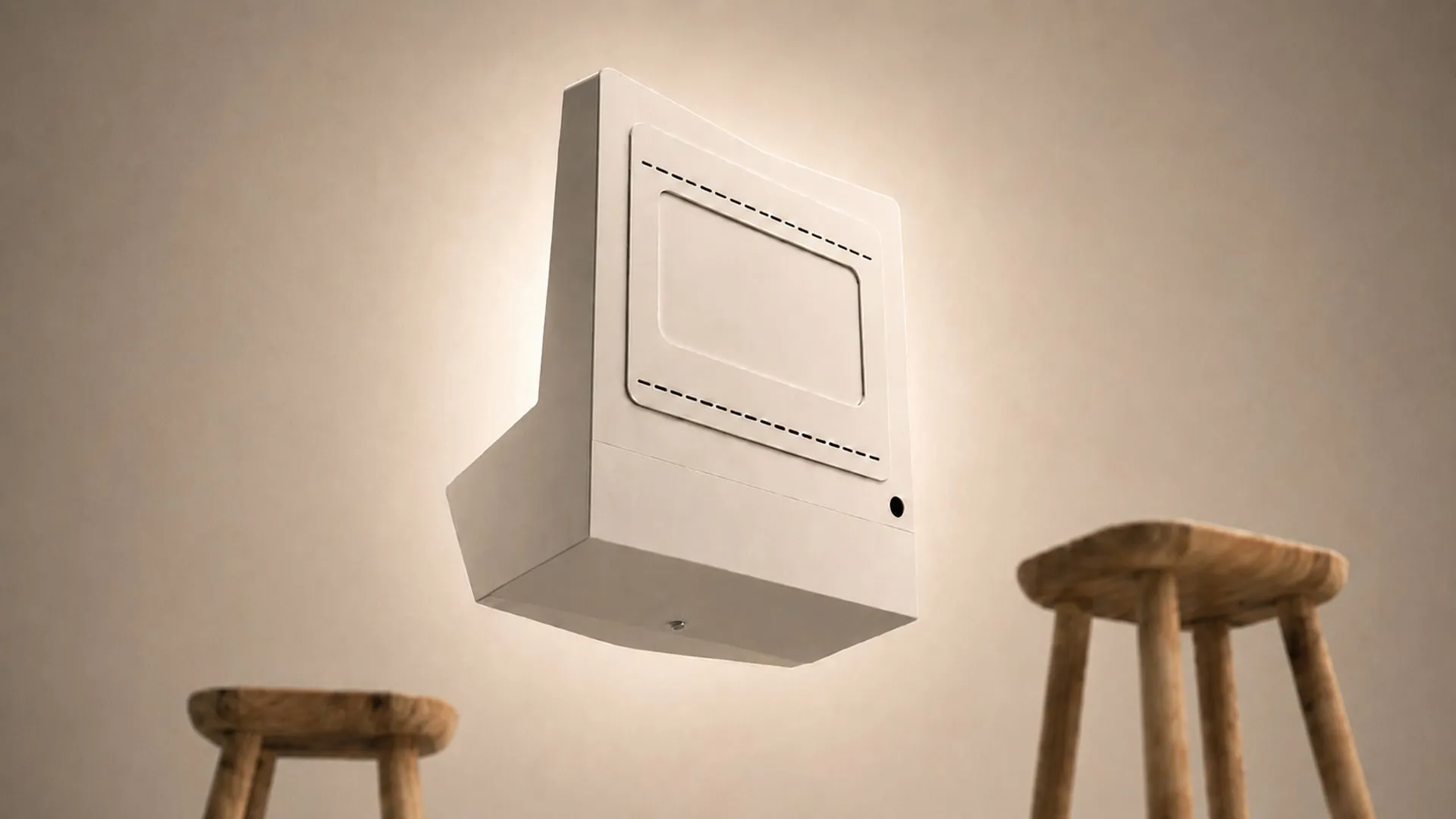
Moving the cabinet off the floor changes the relationship between the product and the room. Playwall becomes a fixed entertainment object rather than a large freestanding cabinet, helping it feel lighter and more integrated into the space.
Control Layout
The controls stay familiar while the surrounding form becomes cleaner.
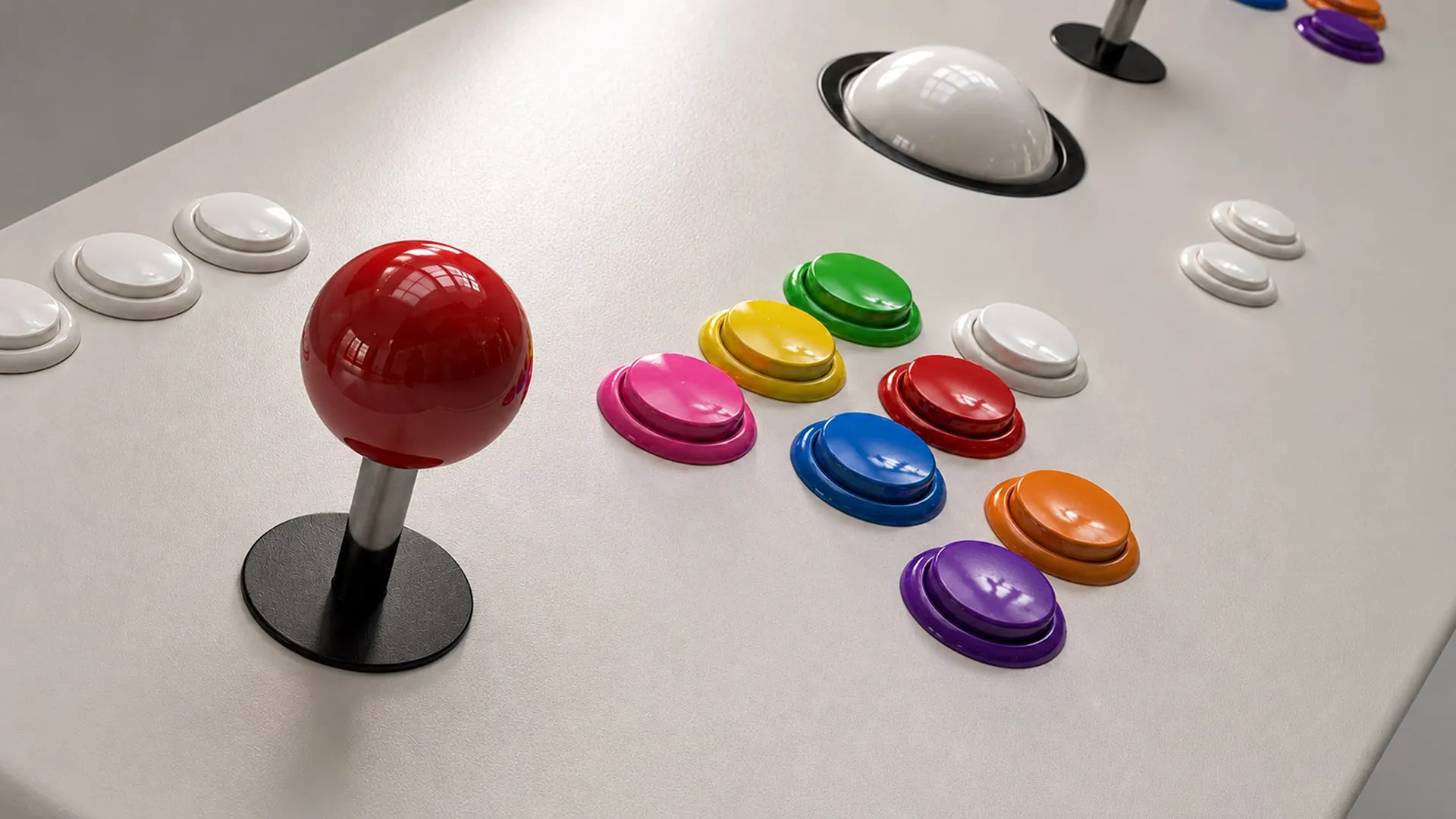
The layout preserves the tactile arcade experience with dual joysticks, colorful buttons, and a central trackball. The design challenge was to organize these controls clearly while keeping the surface calm, balanced, and usable.
Details
Small product decisions carry the experience.
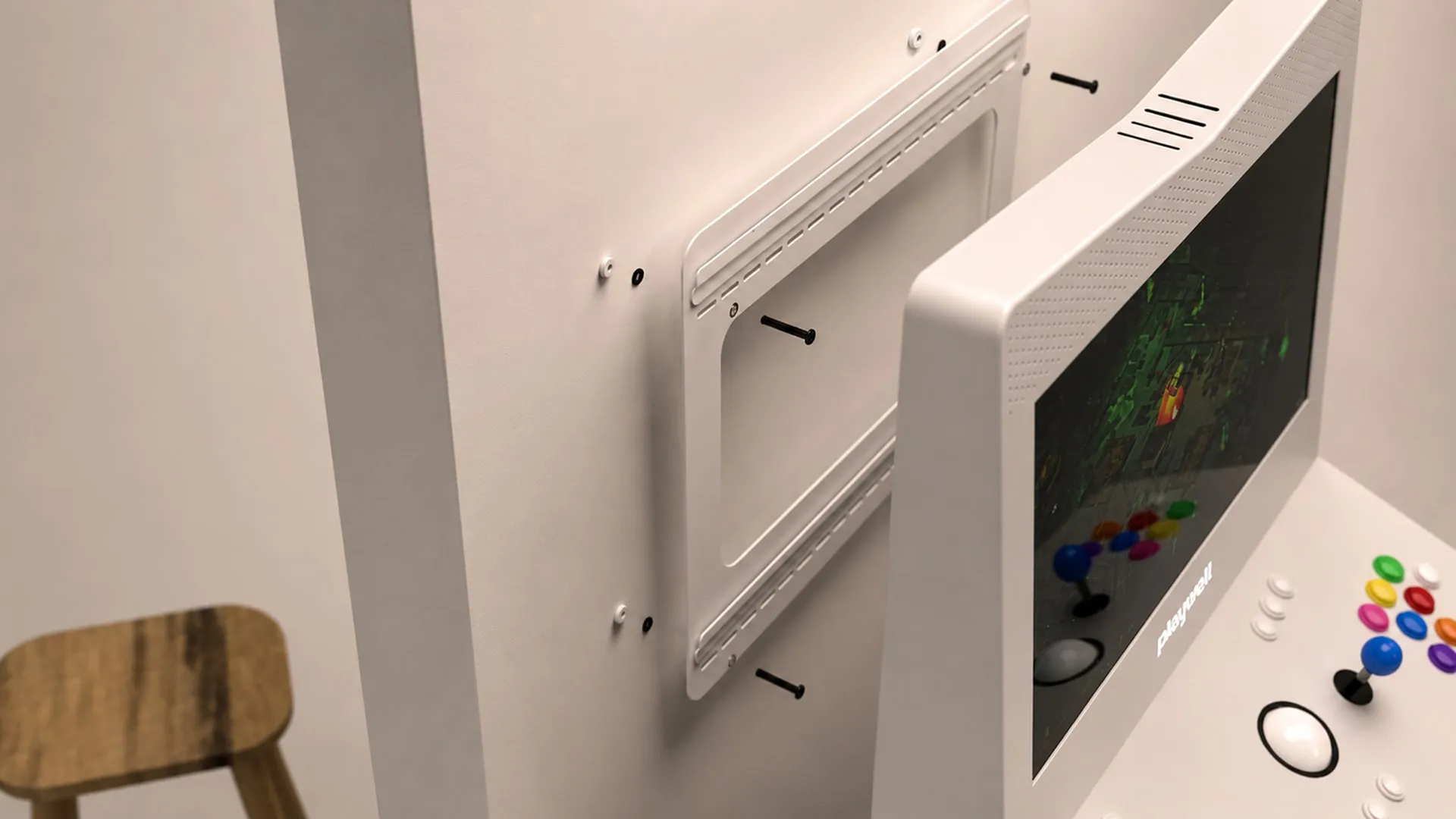
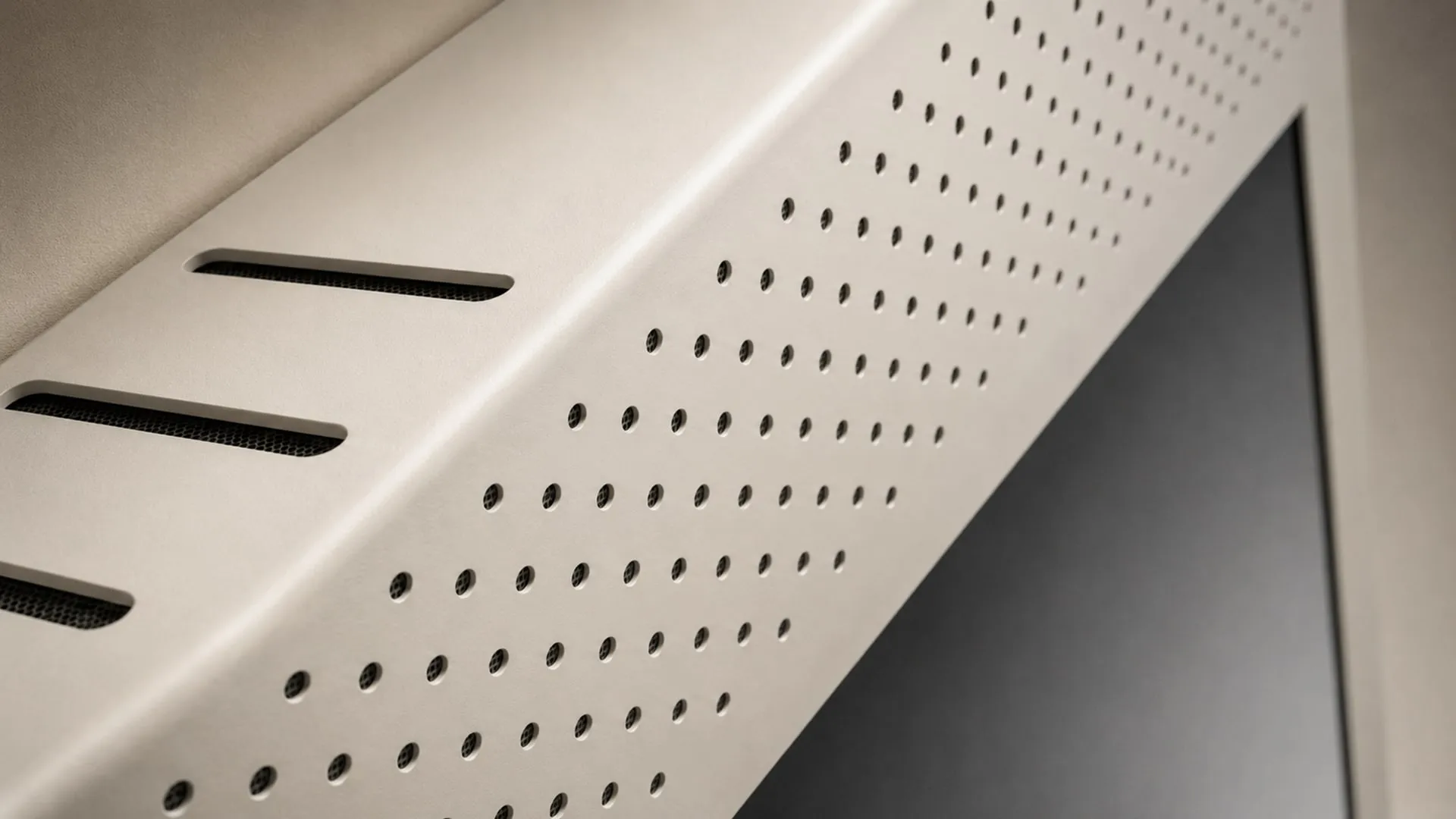
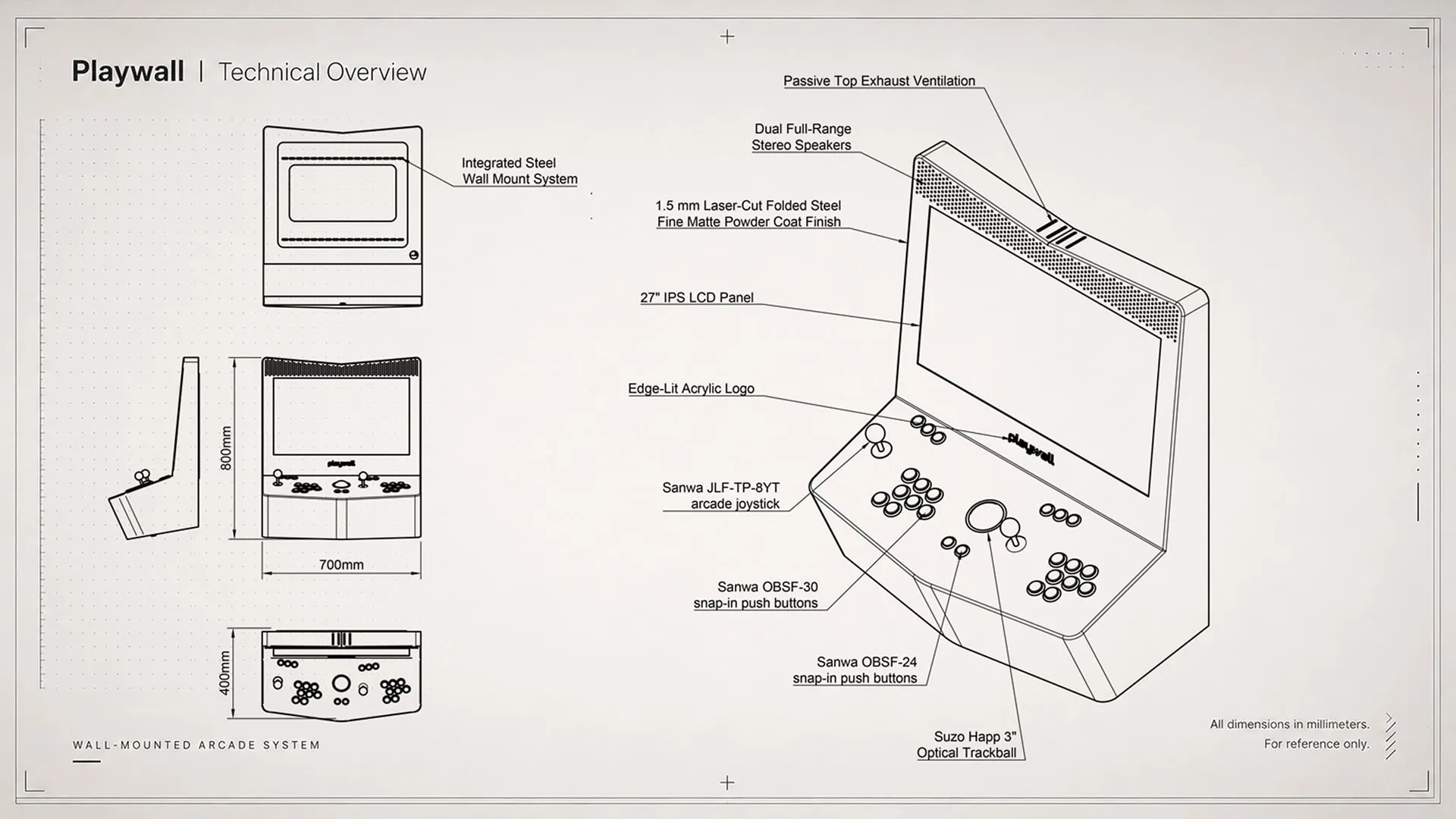
The design was refined through hundreds of small decisions including the wall-mounting system, ventilation, speaker integration, control layout, manufacturing logic, and tactile interaction. Every visible element was considered as part of the overall product experience.
CMF Strategy
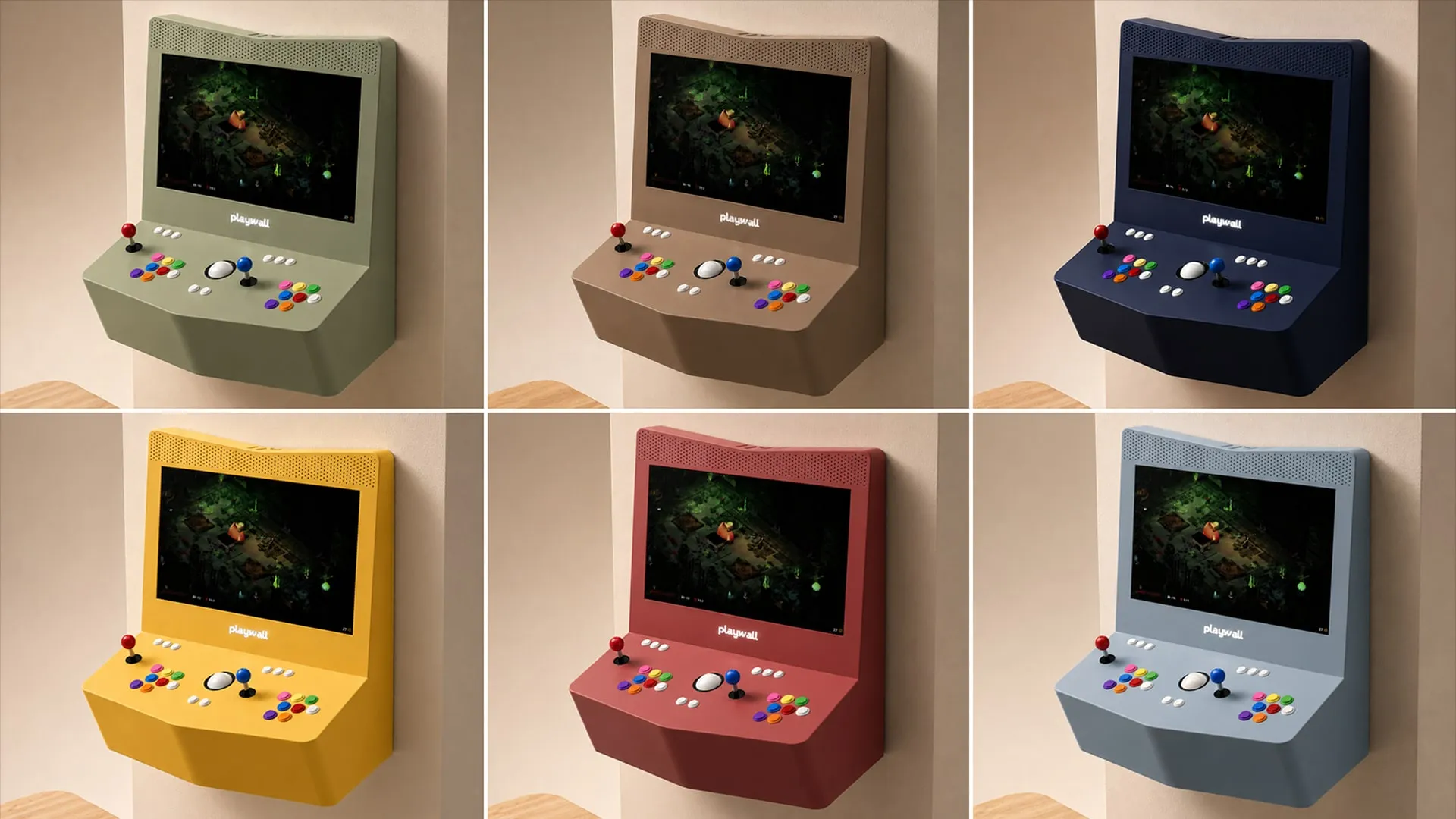
Color options shift the product from playful to more interior-friendly.
Different color directions were explored to understand how the product could adapt to different interior environments. Neutral finishes allow Playwall to integrate into modern homes, while bolder colors reinforce its playful arcade identity.
Manufacturing Considerations
The concept was developed around a clear cabinet structure and visible production logic.
The project considers a powder-coated metal or rigid molded body, a black screen bezel, glass display surface, arcade-grade controls, speaker perforations, rear access, and a wall-mounted installation system. The form language keeps the body simple while allowing the interaction surface and mounting structure to remain practical.
Development
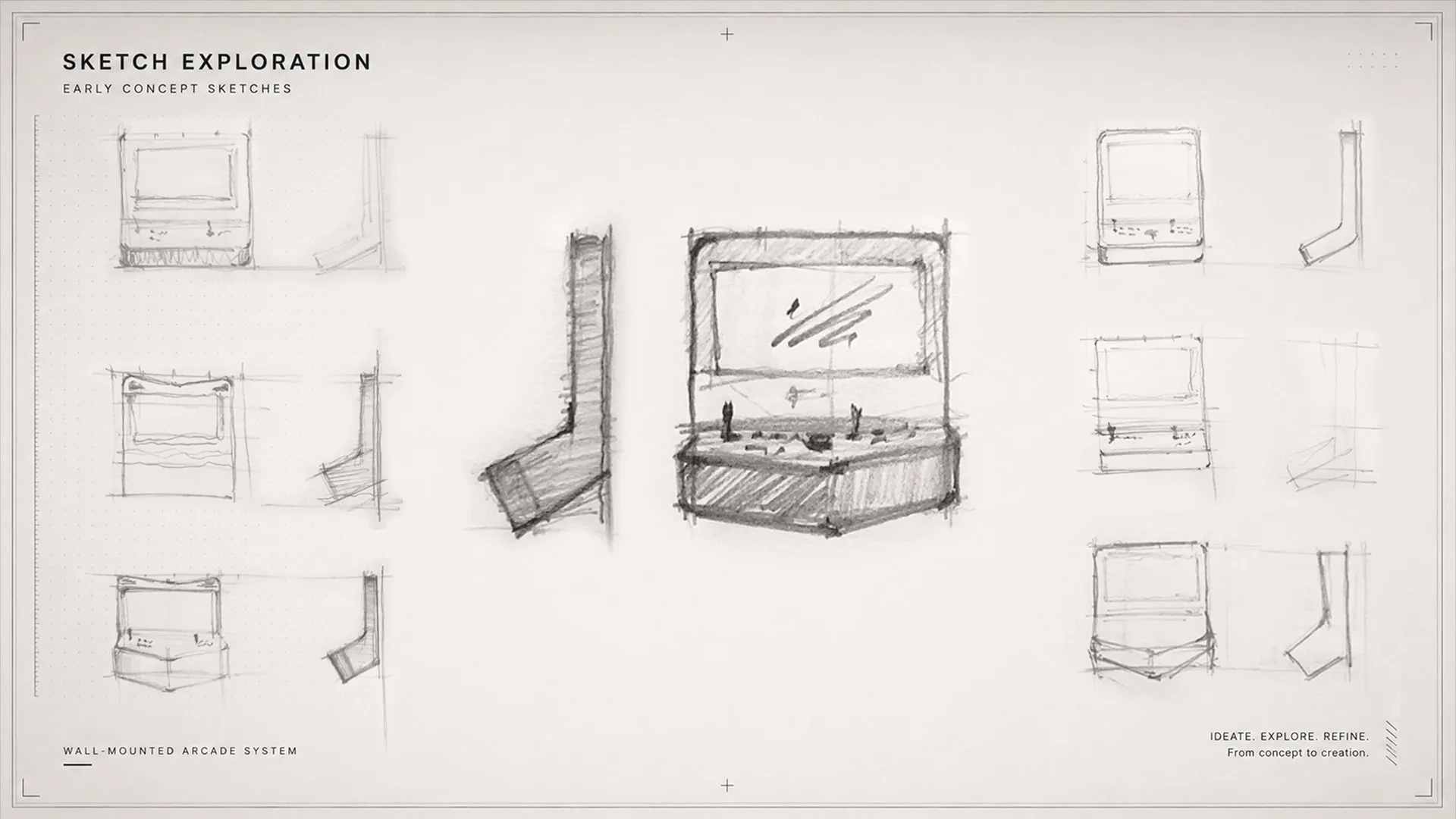
Sketches and technical studies shaped the final direction.
Early concept sketches and technical studies helped transform the initial idea into a manufacturing-aware product concept. The project evolved through continuous refinement of proportions, interaction, wall-mounting strategy, and production logic.
Final Outcome
A compact entertainment product system for modern interiors.
Playwall explores how arcade hardware can evolve into a modern entertainment product that belongs naturally within contemporary living spaces. The project combines industrial design, interaction, manufacturability, and interior awareness into a single product system.
Image Gallery
Selected views across lifestyle, product overview, details, CMF, and development.
Start a project